Flying Butterflies with Flower
A Light, Lyrical Touch—But Does It Hold Up in Real Stitching?
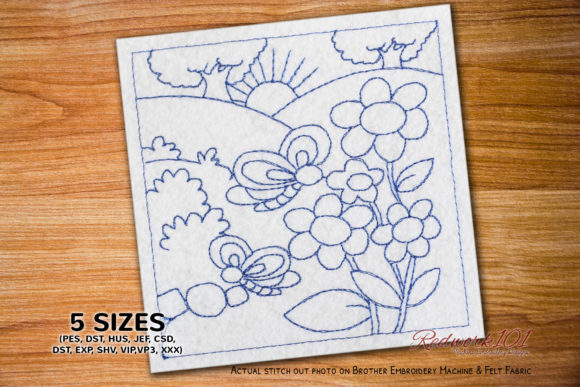
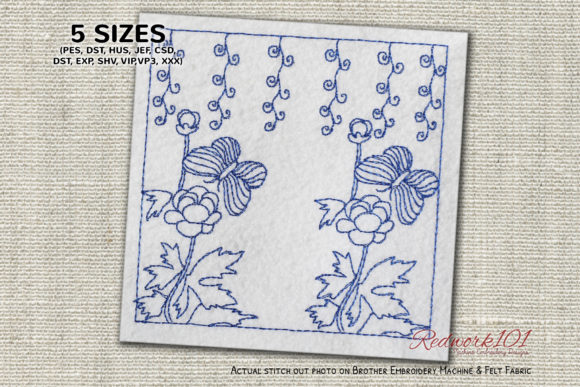
As someone who’s stitched hundreds of embroidery files for clients—from boutique baby onesies to limited-run tote bags—I opened Flying Butterflies with Flower expecting charm. And it delivers: two gracefully posed butterflies alighting on soft, rounded blooms. The mood is gentle, summery, unhurried—ideal for a handmade tea towel, a linen apron, or a nursery pillow cover. But charm alone doesn’t survive the needle. What matters is how this design behaves under tension, across fabric types, and in the hands of a small business owner juggling Etsy orders and craft fair deadlines.
Where It Shines: Natural Fit for Thoughtful Handmade Products
I tested Flying Butterflies with Flower on a medium-weight cotton canvas tote—exactly the kind I stock for local gift shops. On that surface, the design landed beautifully: the curves of the wings read clearly, the flower centers held detail without overcrowding, and the overall scale (neither too dainty nor overly bold) gave the bag instant personality—whimsical but not childish. It also worked well as a sweatshirt embroidery for a small-batch summer collection: centered above the left chest, it felt intentional, warm, and quietly confident.
For baby embroidery? Yes—but with nuance. On a 100% cotton kimono top, the lightness of the motif avoided visual heaviness, and the absence of tight satin-stitch borders meant less risk of stiffening delicate seams. As a patch? It translated cleanly when backed with lightweight fusible web—no fraying edges, no thread nesting in the flower calyx. That’s a win for Etsy sellers bundling embroidered patches with iron-on instructions.
Where to Pause—and Why
This isn’t a high-contrast, high-density machine embroidery design built for dark denim jackets or structured caps. The outer box stitch shown in previews is optional—and wisely so. When I tried it on a textured terry cloth kitchen towel, that box blurred into the pile. Without it, the butterflies floated cleanly; with it, they looked boxed-in and slightly dated.
Also worth noting: the design relies on subtle shape definition—not heavy outlines or dense fill stitch. That makes it lovely on light fabrics, but less forgiving on dark or loosely woven materials unless you adjust stabilizer and thread choice carefully. On a black organic cotton tee, I needed a tear-away plus cut-away combo and slightly heavier thread to keep the wing veins legible. For stretchy knits? Proceed only with proper topping—and consider simplifying the flower center if stitching speed must stay high.
And while the butterflies are well-proportioned, their antennae and wing tips sit close to the edge of typical hoop boundaries. If you’re planning a curved surface like a cap brim or a rounded pillow corner, check your hoop size *before* hooping. A 4x4” hoop may clip delicate details; a 5x7” gives breathing room.
Design Assets That Build Trust—Not Just Decoration
Customers don’t buy “butterflies.” They buy the feeling of care behind a personalized gift, the polish of a small shop’s branding, the quiet confidence of a handmade product that looks *designed*, not assembled. Flying Butterflies with Flower supports that—if used intentionally. Its balanced asymmetry (one butterfly slightly higher, one lower) feels hand-placed, not templated. That subtlety elevates an otherwise simple embroidered patch from “cute” to “considered.”
That said, it won’t carry weight on its own in a commercial embroidery project where brand recognition hinges on bold, scalable icons. It’s not a logo replacement—it’s a seasonal accent, a finishing note, a moment of pause. Use it that way, and it strengthens your product story. Force it into high-impact branding roles, and it fades.
Practical Designer Notes Before You Stitch
- Always test first—on scrap fabric matching your final substrate, with your exact stabilizer and thread colors.
- Check contrast: Run a quick black-and-white mockup. Does the wing shading still read? Does the flower center hold shape without color cues?
- Review stitch density: This design leans lighter—great for breathable wearables, but verify it meets durability needs for items like kids’ backpacks or frequently washed tea towels.
- Inspect small details: The tips of the antennae and petal edges are fine. On low-res printers or zoomed-out digital previews, they can vanish—so double-check your file preview at 100% before sending to production.
- Confirm licensing: Since this falls under Bugs and Embroidery categories, verify whether the file permits commercial use for finished products—or if resale of the digital embroidery file itself requires separate permission.
- Use proper stabilizer: Lightweight cut-away for stable wovens; tear-away + topping for knits or terrycloth.
Final Thought: A Design That Rewards Intentionality
Flying Butterflies with Flower isn’t flashy—but then, neither is the best handmade work. It’s the kind of embroidery file that makes a customer pause mid-scroll on Etsy, tilt their head, and think, “Yes—that’s the one.” It suits the craft business owner who values cohesion over clutter, the apparel decorator who knows summer doesn’t need shouting to be felt, and the maker who understands that sometimes, the most memorable finished product is the one that breathes easy.
Just remember: its grace comes from restraint. Respect the fabric. Respect the stitch. Respect the context. And let Flying Butterflies with Flower do what it does best—not dominate, but delight.