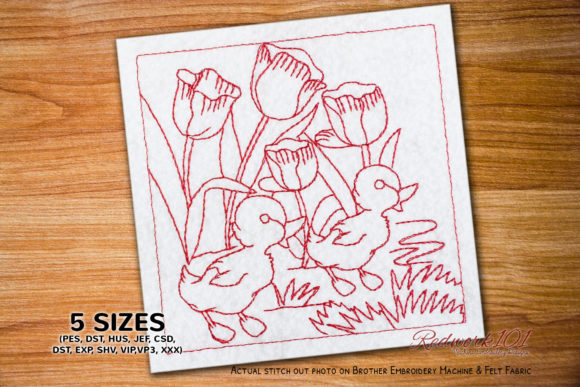
Two Ducklings Enjoying Greenery
A Gentle, Lively Moment—Perfect for Thoughtful Handmade Goods
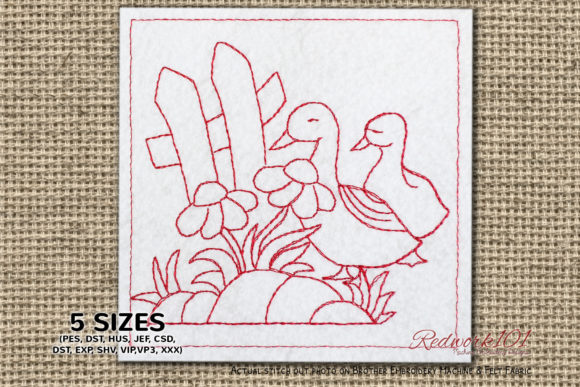
First glance at Two Ducklings Enjoying Greenery feels like catching a quiet spring morning by the pond: soft movement, unhurried charm, and a gentle balance between subject and setting. It’s not a bold statement piece—it’s an invitation. The ducklings are centered but relaxed, nestled among flowing greenery and blooming flowers that suggest growth, care, and natural rhythm. There’s no forced symmetry or rigid framing; instead, the composition breathes. That makes it ideal for projects where warmth and sincerity matter more than flash—think baby onesies, linen tea towels, embroidered nursery pillows, or boutique-style tote bags meant to be carried daily, not just displayed.
How It Lives in Real Embroidery Projects
I recently tested Two Ducklings Enjoying Greenery on a lightweight organic cotton tote for a local children’s boutique—and it landed beautifully. The design scaled well at 4.2” wide (hoop size wasn’t strained), and the stitch density felt intentional: enough fill stitch to define petals and duckling fluff without overwhelming the fabric. Satin stitch outlines on the ducklings’ beaks and flower centers held crispness even after gentle washing. Because the greenery flows outward rather than stacking tightly, there’s natural breathing room—no dense clusters that risk puckering on knits or lightweight weaves.
It shines on sweatshirt embroidery when placed slightly off-center on the chest—soft enough for kids’ wear, distinctive enough for adult lifestyle branding. As a baby embroidery motif on a swaddle blanket or bib, it reads as tender and age-appropriate without leaning into cliché. On a patch? Yes—but only if the outer box stitch is omitted or simplified. That optional border adds visual weight, which works well on denim or canvas but can feel heavy on delicate fabrics like chambray or gauzy cotton.
Where Caution Is Worth Taking
- Small hoop sizes: Avoid shrinking below 3.5”. Fine details—like individual flower stamens or the subtle layering of leaves—lose clarity and may stitch inconsistently.
- Textured or stretchy fabric: Use cutaway stabilizer, not tear-away. The greenery’s organic curves demand consistent support, especially on terry cloth towels or ribbed knit caps.
- Dark or heavily patterned backgrounds: Test thread colors thoroughly. Light greens and pale yellows recede on charcoal or navy unless paired with high-contrast underlay or brighter top threads.
- Curved surfaces (caps, hats): The layout isn’t inherently cap-friendly—the bottom edge flows downward, not around a curve. Repositioning or slight digitizing tweaks may be needed for clean placement on structured headwear.
- Frequent-wash items: Reinforce satin-stitched flower centers with a second pass if using for kitchen towels or baby bibs. Running stitch accents in the greenery hold up well, but fine details benefit from denser underlay on high-use pieces.
What It Adds to Your Finished Product—Beyond Aesthetics
Two Ducklings Enjoying Greenery quietly elevates perceived value. It doesn’t scream “handmade”—it feels handmade: considered, unhurried, and tactile. Customers notice that. On Etsy listings, it performs best when styled in natural light with complementary textures—wooden spoons beside an embroidered tea towel, or a linen pillow cover resting on a woven rug. That authenticity translates to trust: buyers assume care went into both design selection and stitching execution.
For craft businesses building cohesive branding, this design slots neatly into a “gentle nature” seasonal collection—paired with fern motifs, sprigged berries, or simple bird silhouettes. It avoids trend fatigue because it leans into timelessness, not novelty. And unlike hyper-detailed machine embroidery designs that demand perfection, Two Ducklings Enjoying Greenery has forgiving proportions and clear visual hierarchy—making it accessible for intermediate embroiderers while still satisfying advanced designers who appreciate thoughtful spacing and stitch variety.
Practical Designer Notes Before You Stitch
- Always run a test stitch on scrap fabric matching your final project’s weight and weave—especially if using textured or dark fabric.
- Review the color chart carefully. The description notes “the color of the outer Box is a different”—so confirm whether that box is meant as part of the main design or purely a presentation frame. If it’s stitched, decide early whether to include it or omit it for cleaner integration.
- Check stitch density in the flower centers and duckling down areas. If your machine struggles with tight fills, consider reducing density by 5–8%—the design’s charm lies in its softness, not its density.
- Compare how it reads in black-and-white mockups. Does the contrast hold? If not, adjust thread values before committing to dark garments or layered appliqué.
- Use proper stabilizer—not just for hold, but for drape. A medium-weight cutaway preserves shape on apparel; a lightweight tear-away works fine for stable linens or quilting cotton.
- Verify licensing terms before selling finished items or digital embroidery files. This is essential for Etsy sellers and small shop owners using it as a core design asset.
Final Thought: A Design That Serves the Maker and the Moment
Two Ducklings Enjoying Greenery isn’t flashy—but it’s reliable, expressive, and quietly versatile. It fits naturally into custom apparel, personalized gifts, and small-batch merchandise without demanding special treatment. It rewards attention to detail but forgives minor inconsistencies. For embroidery designers building a library of commercial embroidery assets—or craft business owners curating meaningful design collections—it earns a steady place: not as a showstopper, but as a trusted companion for projects where feeling matters as much as finish.