Lotus Flower Lineart: A Craft Fair Designer’s Real-World Review
First Impression: Minimal, Elegant, and Instantly Recognizable
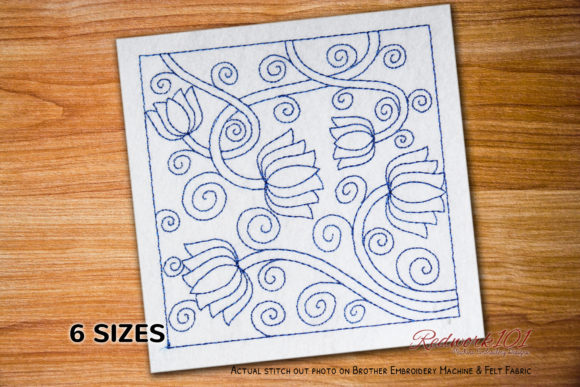
Lotus Flower Lineart lands with quiet confidence—not loud, not fussy, but deeply intentional. As an embroidery designer who’s curated over 200 craft fair booths, I can tell you this: it reads as elegant minimalism at a glance. It’s not farmhouse or rustic; it’s refined. Not modern in a stark, geometric way—but soft-modern, with organic flow and balanced negative space. That matters immensely when shoppers scan your table in under three seconds. Lotus Flower Lineart doesn’t shout—it invites pause. And in a sea of florals, that subtle distinction is your competitive edge.
Where It Shines: Product-by-Product Reality Check
Let’s talk real-world application—no theory, just what moves at the booth:
- Tote bags: Perfect as a centered chest emblem or lower-corner accent. The lineart scale holds beautifully on cotton canvas—even at 3.5" wide—without thinning out or bleeding into seams.
- Aprons: Ideal for left-chest placement. The clean silhouette reads clearly against textured denim or linen, and its symmetry balances asymmetrical apron pockets and ties.
- Tea towels: A standout. Embroidered near the hem or corner, Lotus Flower Lineart adds handmade sophistication without competing with bold prints or busy kitchen decor.
- Embroidered patches: Highly effective. Its outline-based structure translates cleanly to iron-on or sew-on formats—no fill areas to distort during cutting or laundering.
- Caps & curved surfaces: Use caution. The outer Box Stitch (mentioned as optional) helps anchor the design on curved brims—but test first. Without stabilizer support, fine lines may pucker or shift.
- Pillows & pouches: Excellent as a focal point on 8–12" square surfaces. The lotus shape naturally centers attention—and feels giftable, especially in neutral thread on ivory or oat linen.
- Printable mockups & Etsy listings: Photographs exceptionally well. Clean edges + high contrast = crisp thumbnails and scroll-stopping product shots. Buyers instantly “get” the aesthetic—no caption needed.
Production Practicality: Speed, Clarity, and Batch-Friendly Flow
Lotus Flower Lineart is refreshingly production-smart. There’s no dense fill stitching, no micro-detailing that stalls your machine or frustrates hand-finishers. It’s built for rhythm: consistent stitch direction, open spacing, and generous line weight. That means faster hooping, fewer thread breaks, and reliable repeatability across 50+ tote bags or 30 tea towels in one session.
It works equally well small (1.2" on a patch) or large (5.5" on a market bag)—but here’s the nuance: below 1", delicate petal tips begin to soften. If you’re targeting tiny embroidered jewelry tags or keychain charms, confirm clarity on your machine’s test run. Also note—the optional Box Stitch isn’t decorative fluff. When used, it creates visual framing and improves registration on uneven fabric textures like terry cloth or heavy duck canvas.
Careful-Use Notes: Protect Your Quality & Reputation
This design rewards thoughtful execution—and punishes assumptions. Key considerations:
- Fabric texture matters: On highly napped or looped towels, reduce top thread tension slightly and use cutaway stabilizer. Otherwise, line definition blurs.
- Dark fabrics demand contrast testing: Light thread on black linen? Gorgeous—if your digitizing preserves line integrity. But skip metallic or pastel threads unless you’ve verified coverage density.
- Avoid ultra-thick layers: Double-layered denim or quilted pouch backs may compress fine lines. Opt for lightweight tear-away + medium cutaway combo instead of heavy stabilizer alone.
- No lettering or gradients to worry about: That’s a win. Lotus Flower Lineart is pure outline—so no color-matching stress, no fading concerns, no registration drift between layers.
Booth & Brand Impact: Why It Converts
In person, Lotus Flower Lineart elevates perceived value instantly. It signals intentionality—not “cute craft,” but considered creation. Customers linger longer at displays where it appears on matching apron/towel/tote sets. It strengthens brand consistency across your small shop product range, especially if your palette leans earthy, muted, or monochrome.
At craft fairs, it draws the “quiet buyers”—the ones who skip glitter and go straight for tactile quality and understated beauty. They’re your repeat customers, your Instagram taggers, your wholesale inquiry starters. And because it’s part of the Single Flowers category, it pairs seamlessly with other botanical linearts—letting you build cohesive collections without visual fatigue.
Designer-to-Designer Checklist Before You Stitch
Before cutting your first fabric or uploading to Etsy:
- Test Lotus Flower Lineart on scrap fabric matching your final product’s weight and weave.
- Check thread contrast—especially on dark or textured substrates.
- Review spacing between petals and stem: tight gaps risk stitching overlap or skipped areas.
- Confirm hoop size compatibility—some versions include the optional Box Stitch, which expands footprint.
- Inspect stitch density: even lineart needs enough stitches per inch to hold shape after washing.
- Use appropriate stabilizer—cutaway for stretchy knits, tear-away for stable wovens, fusible for lightweight linens.
- Create at least one real mockup (not just digital). See how light hits the raised thread, how it drapes, how it feels in hand.
- Compare fabric colors side-by-side: ivory vs. oat vs. natural linen all change the mood—and your buyer’s emotional response.
- Verify commercial embroidery rights. Since “The Box Stitch shown in picture is optional. The color of outer Box is different color in most of the designs unless it is part of the design itself, you can skip the color directly in yo” implies customization flexibility, ensure your license permits finished-product resale.
Final Thought: A Design That Sells While You Sleep
Lotus Flower Lineart isn’t just another Embroidery file—it’s a quiet sales engine. It looks premium without demanding premium time. It photographs beautifully without filters. It scales reliably without redesign. For Etsy sellers, boutique makers, and craft fair veterans alike, it’s the kind of machine embroidery design that earns compliments, drives bundles, and builds recognition—without ever needing to explain itself. In a marketplace saturated with noise, sometimes the most powerful statement is a single, serene line.