Yellow Flower Design: A Real-World Embroidery Review
First Impressions: Cheerful, Clean, and Quietly Confident
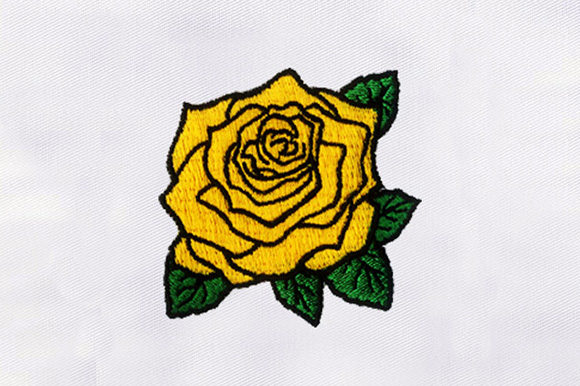
When I opened Yellow Flower Design, I wasn’t met with overwhelming detail or aggressive contrast—just a quiet, sunlit presence. It’s a single bloom rendered in balanced proportions: soft petal curves, a centered stamen, and subtle layering that suggests depth without crowding. This isn’t a botanical illustration—it’s an embroidery-first design. The layout breathes; it doesn’t fight the hoop. As a designer who regularly chooses assets for client projects and small-batch production, I immediately saw its versatility: not too literal, not too abstract—just right for a handmade product that feels intentional, not mass-produced.
Real-Life Test: Stitching It onto a Linen Tea Towel
Last week, I used Yellow Flower Design on a natural linen tea towel for a local boutique’s spring collection. We chose medium-weight cutaway stabilizer and 40-weight rayon thread in buttery yellow and warm green. The result? Crisp satin stitches held shape beautifully across the fabric’s gentle texture, and the fill stitch in the center stayed smooth—not puffy, not flat. Customers commented on how “light” it felt—no heaviness, no stiffness. That’s critical for kitchen textiles. It also translated well to a printable mockup for the Etsy listing: clean lines, clear silhouette, zero pixelation at standard web sizes. For craft business owners, that means less time editing previews and more time shipping orders.
Where It Shines (and Where It Asks for Thought)
Yellow Flower Design excels on stable, mid-weight fabrics: cotton poplin for baby onesies, twill for embroidered patches, fleece-lined sweatshirts, and structured tote bags. On a custom unisex sweatshirt, the design read clearly from six feet away—no lost detail, no thread pull. Its moderate stitch density kept the backside tidy, which matters when selling premium apparel. As a holiday embroidery option, it’s fresh for Easter or Mother’s Day—softer than bold florals, warmer than minimalist line art.
That said, proceed with care on:
- Stretchy fabric—like jersey t-shirts—without proper tear-away + cutaway combo stabilizer. The petal edges can distort if tension isn’t dialed in.
- Dark fabric—especially charcoal or navy—where light yellow thread may lack pop. I tested it on black cotton sateen and swapped to gold metallic for better visibility (a quick, effective tweak).
- Curved surfaces, like cap fronts. The design’s gentle radius works—but only in hoops 4"x4" or larger. Smaller hoops compress the petal flow; test first.
- Frequent-wash items like baby bibs or kids’ pillow covers. Reinforce with a light topping of water-soluble stabilizer over the top to lock down satin stitch sheen during laundering.
Design Integrity Meets Customer Trust
As an Etsy seller and embroidery product reviewer, I watch how designs affect buyer perception. Yellow Flower Design reads as *handmade*, not digital. There’s no jagged edge, no floating stitch, no inconsistent underlay—just thoughtful spacing and intelligent jump stitch placement. That builds trust. When a customer sees this on a personalized gift—a linen napkin set, a nursery pillow cover, a boutique apron—they don’t think “machine-made.” They think “carefully chosen,” “thoughtfully stitched,” “made for them.” That intangible quality lifts perceived value, especially for small shop products where differentiation is everything.
It also supports brand consistency. Whether you’re building a cohesive line of spring-themed kitchen goods or launching a botanical-inspired capsule collection for baby embroidery, Yellow Flower Design holds its own alongside other Single Flowers—or stands alone with quiet confidence. No need to over-accessorize. Its simplicity makes it adaptable across mediums: embroidered patch, tote bag design, even a subtle chest accent on a child’s smock.
Practical Designer Notes You’ll Actually Use
Before stitching Yellow Flower Design into your next finished product, here’s what I do—and recommend:
- Test on scrap fabric that matches your project’s weight and weave—not just muslin.
- Check thread color contrast in both natural and artificial light. Yellow on ecru looks warm; yellow on oat looks muted. Adjust hue slightly if needed.
- Review stitch density in your embroidery software. If it’s dense near the center, consider reducing density by 5–8% for lightweight fabrics.
- Confirm hoop size. This design fits comfortably in 4"x4", but check your machine’s actual usable area—some hoops lose 1/8" at the edge.
- Inspect small details like petal tips and stamen definition at 200% zoom. Look for stray running stitches or tiny gaps.
- Test in black-and-white mockups. If it reads clearly without color, it’ll hold up on dark fabric or grayscale printouts.
- Use proper stabilizer: cutaway for knits, tear-away for stable wovens, and a light topping for high-sheen threads.
- Verify licensing before selling finished items or bundling Yellow Flower Design as part of a commercial embroidery kit or digital embroidery file pack.
Final Thought: Not Just Another Flower
Yellow Flower Design isn’t flashy—but it doesn’t need to be. In a market saturated with oversized motifs and over-digitized trends, it offers clarity, calm, and craftsmanship. It works quietly behind the scenes: elevating a simple tea towel into a curated gift, grounding a playful baby onesie with botanical warmth, adding sincerity to a holiday embroidery project without shouting. For designers, craft business owners, and creative entrepreneurs, that kind of reliability—stitch after stitch, project after project—is rare. And valuable.